

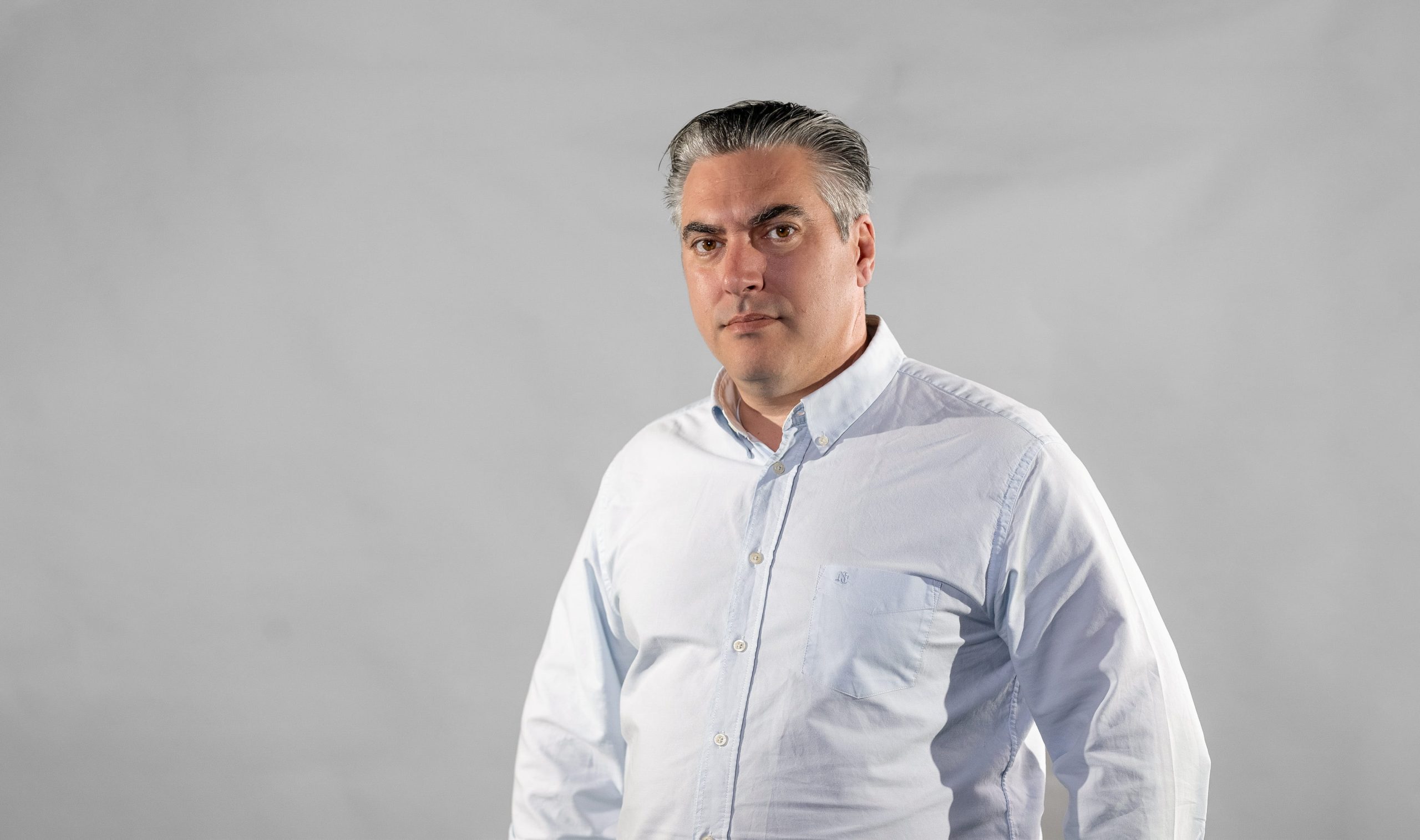
We talk openly about failure, but with precision. The message is not “failure doesn’t matter”. It is “fail early, fail small, and learn fast”.
When people hear the term “production”, they often imagine repetition, stability and long cycles where change is costly and avoided. At TEKEVER, production is something very different by design. For us, production is not the final step of a linear process.
It is a learning system. A place where design, operations and reality meet, and where change is not an exception but a constant source of information.
Our focus is not traditional “efficient production”. It is effective delivery: the right capability, at the right time, with the right reliability, for people operating in complex, evolving environments.
Production designed to evolve
The UAS domain moves fast. Operational contexts shift, customer needs evolve, and what “good” looks like today may be insufficient tomorrow. That reality shapes how we think about production.
Rather than optimising for long periods of stability and high-volume standardisation, we design our production model to absorb change. Design updates, component substitutions, configuration adjustments and operator-driven improvements are not disruptions; they are expected signals that the system is learning.
This requires a different mindset. In more traditional manufacturing environments, frequent change is often treated as failure. At TEKEVER, it is treated as progress. The challenge is as much cultural as technical: helping teams understand that adaptability is a core capability, not a temporary workaround.
Deciding before certainty arrives
One of the most important skills we develop across our production teams is decision-making with incomplete information.
Perfect data rarely arrives on time. Waiting for certainty often means delaying learning and delaying capability. Instead, we train ourselves to ask a simpler, more practical question: do we know enough to make a responsible decision now?
If the answer is yes, we act. Then we observe, learn and adjust.
This does not come naturally to everyone. Some people are energised by ambiguity; others find it uncomfortable. But in a high-tempo environment, this skill is essential, and it can be learned.
One internal principle captures this approach well: learn fast, and don’t fail twice on the same thing. It is not about avoiding failure altogether, but about extracting value from it quickly.
“Fail, fail now, learn fast”
We talk openly about failure, but with precision. The message is not “failure doesn’t matter”. It is “fail early, fail small, and learn fast”.
Early failures are often a sign that teams are moving, testing and exposing assumptions before they become expensive. Iteration is not a compromise on quality; it is the path to it.
This is particularly relevant for younger colleagues. Many are highly capable and highly driven, but also prone to perfectionism. That can show up as hesitation: waiting for the perfect answer before taking the first step. In our context, waiting for perfect can be the biggest risk of all.
We actively coach people to move sooner, test earlier, and let evidence replace assumptions. Running fast cycles surfaces issues while they are still cheap to fix and builds confidence grounded in reality. For many, it takes several months to fully internalise this rhythm, especially if they come from environments where mistakes carried heavy penalties.
This is why soft skills matter so much. Technical competence can be taught relatively quickly. Mindset takes longer: communication, resilience, comfort with iteration, and confidence in making decisions under uncertainty.
When the customer is close, effectiveness becomes personal
In many industries, the customer feels abstract and distant. At TEKEVER, that is often not the case.
Very frequently, the customer is an operational team we work alongside. That proximity changes everything. When a system is unavailable because of a defect or a missing component, it is not an abstract metric; it is a mission that cannot be flown by people we know and respect.
That emotional connection is not a weakness. It is a powerful driver of accountability, responsiveness and continuous improvement. Effectiveness stops being a KPI and becomes a shared responsibility.
Learning that travels forward
This way of working did not appear overnight. It has been shaped through years of trial, error, iteration and learning, sometimes the hard way.
What matters now is that this learning does not stay local or static. As TEKEVER grows and expands its production footprint, these principles travel with us: how to design for change, how to support decision-making under uncertainty, how to balance ambition with care for people, and how to avoid innovation getting trapped in endless preparation.
Every new facility is an opportunity to apply these lessons earlier, embed them more intentionally, and build the next version of our operating model from day one.
From efficiency to effectiveness
Efficiency matters, but it is not the goal. Effectiveness is delivering real capability that works, for people who rely on it, in environments that keep changing. It is building teams who are comfortable with iteration, confident in their decisions, ambitious in their targets, and supported as humans.
That is what we are building at TEKEVER: not just systems, but a way of working that turns learning into operational advantage.
If you look closely at our production environments, you will see aircraft, ground systems, test equipment and busy teams. What matters most, though, is what sits underneath it all: a shared belief that change is valuable, learning is continuous, and effectiveness is what ultimately counts.